

Member Feature
Christine Proffitt on Building Predictable Growth Through Better Sales Leadership
Drawing on more than 25 years in sales and executive leadership, Christine Proffitt helps organizations strengthen pipelines, develop people, and turn sales activity into measurable results.
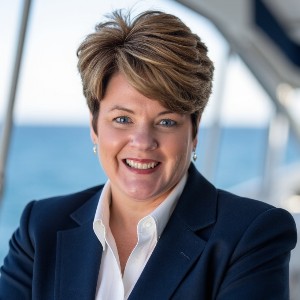
For Christine Proffitt, predictable revenue begins well before a deal closes. It takes shape in the quality of a leader’s decisions, the integrity of a sales pipeline, and the expectations established across a team. Just as importantly, it depends on whether sales professionals receive the coaching, trust, and accountability they need to improve.
That perspective reflects more than 25 years of experience spanning sales, operations, business growth, and executive leadership. Today, as founder of Proffitt Sales Advisory & Coaching, Christine helps business owners and sales leaders bring greater clarity, discipline, and predictability to their revenue organizations. Her work centers on sales strategy, pipeline integrity, executive coaching, leadership development, and the connection between everyday sales activity and measurable business results.
Looking Beyond the Numbers
Christine spent most of her career at Integrity Staffing Solutions, advancing through sales, operations, and executive leadership roles before serving as Executive Vice President of Sales. Across that career, she led national sales organizations, managed a business portfolio exceeding $125 million, helped grow a business to $150 million in annual recurring revenue, and contributed more than $50 million in new account growth.
Those figures provide one measure of scale, but they do not fully capture how Christine defines effective leadership. She places equal weight on the sales professionals she has coached, the leaders she has developed, and the teams she has helped become more confident and accountable.
Her experience reinforced a central lesson: sustainable growth is not simply a matter of pushing for a larger number. It requires leaders to understand how customers make decisions while creating an environment in which their teams can execute consistently. Trust, clear expectations, thoughtful coaching, and meaningful accountability are therefore not separate from revenue performance. They are among its foundations.
Navigating the Space Between Strategy and Results
Christine describes a particularly important part of the sales process as “The Messy Middle.” It is the space between a strategy and its eventual outcome—where deals can stall, forecasts can become uncertain, and leaders must make difficult calls without perfect information.
It is also where habits become visible. Sales professionals may learn to ask stronger questions, assess opportunities more carefully, and move forward with purpose. Without that discipline, activity can continue without producing meaningful progress. For leaders, the challenge is to distinguish motion from momentum and optimism from a well-supported forecast.
Christine created her writing on The Messy Middle to examine these practical realities. Her subjects include leadership, coaching, accountability, artificial intelligence, emerging sales technologies, and the human dynamics that influence business decisions. The aim is not to remove every uncertainty from selling. Instead, it is to help professionals think more deliberately, question their assumptions, and make better-informed choices.
Helping Teams Move Beyond Founder-Led Sales
One area of Christine’s advisory work is the transition from founder-led selling to team-driven growth. A founder may hold years of customer knowledge, personal relationships, commercial instincts, and a nuanced understanding of the company’s value. As an organization grows, transferring that knowledge into a process others can use becomes a significant leadership challenge.
Hiring additional salespeople alone does not complete that transition. Teams need a clear strategy, shared standards, reliable pipeline practices, and coaching that helps people understand why customers act. The objective is a repeatable approach that preserves valuable relationships and momentum while reducing dependence on any one person.
Accountability With Empathy
Christine’s leadership philosophy brings together standards that are sometimes treated as opposites. She believes leaders can hold people accountable while remaining empathetic, challenge assumptions while encouraging confidence, and pursue measurable results while investing in individual development.
Listening is central to that approach. In Christine’s view, effective salespeople are not necessarily those who speak the most. They listen closely, ask thoughtful questions, identify a customer’s real challenges, and shape solutions around meaningful value. The same curiosity matters in coaching, where a leader must understand what is obstructing performance before deciding how to address it.
Ultimately, Christine wants the next generation of sales leaders to look beyond dashboards, activity metrics, and technology as standalone answers. Those tools can support execution, but they cannot replace trust, sound judgment, consistency, or a commitment to developing people. Her work advances a straightforward principle: predictable revenue is an outcome of strong leadership—not a substitute for it.