

Business Growth
When a Client Asks for More: Keep a Project From Drifting
When an exhibition client asks for one more display after approving the model, make the added work, tradeoffs and decision visible.
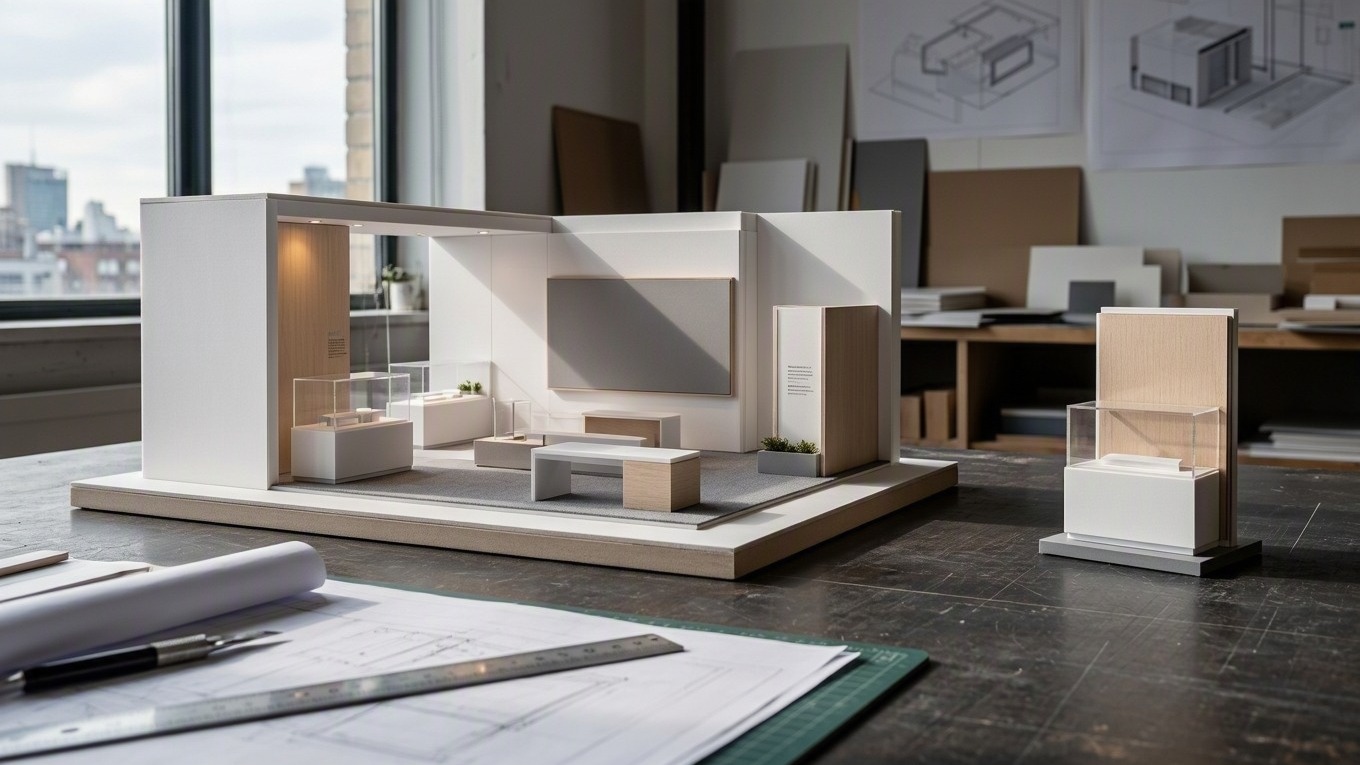
A client approves the model for an exhibition space, then asks whether one more display can be added. The request may be worthwhile: perhaps a newly available product needs a place on the floor. But for an independent exhibition designer, “one more display” can mean revising the layout, testing circulation, updating model components, coordinating materials, and reworking presentation files. If that work begins with an informal yes, the project can expand while the agreed fee and delivery date remain unchanged.
The useful response is a short project conversation that turns a vague addition into a decision about work, timing, and priorities. That protects the designer’s capacity while giving the client a practical way to choose what matters most.
Return to the agreed deliverable
Start with the baseline already shared. The original deliverable might include a scale model and design package for a defined exhibition footprint, a specified number of displays, an agreed review round, and a presentation date. Restating that baseline gives both parties the same reference point before discussing a new idea.
Rutgers School of Business-Camden recommends treating the original plan as a baseline and updating requirements when a change is accepted. American Public University describes scope creep as gradual expansion beyond the original agreement, often through requests that seem small alone. The extra display is therefore worth examining rather than folding into existing work by default.
Ask enough questions to define the request. Does the new display occupy unused space, or require moving existing elements? Is it a physical module for the model, a new concept, or a fully specified addition to the final package? Does the client need it for the current presentation, or would a later phase serve the same purpose? Answers distinguish a contained adjustment from a change that alters the project’s path.
Put the tradeoff where the client can see it
Describe the impact in ordinary business language. The designer might explain that adding the display requires a revised floor plan, a new model component, another layout review, and updates to final materials. That creates additional design time and may move the presentation date. If outside fabrication, printing, or venue coordination is involved, identify those dependencies before they become assumptions.
The University of the Built Environment emphasizes communicating changes to budget and roadmap, while American Public University recommends weighing requests by impact and value against the baseline. Offer choices instead of an opaque obstacle.
One option could be to add the display now and quote the design work separately. Another could be to keep the current date by swapping out a lower-priority display, keeping the footprint and model workload within the original scope. A third could be to complete the approved model and develop the addition in a defined next phase. These are illustrative options, not a fixed menu.
Each option should make a consequence visible. A client may approve more time or a separate fee when the added work is concrete, or decide the display can wait. Either decision is easier when the designer connects the request to a tradeoff rather than a favor to absorb.
Close the loop in writing
Record the outcome in a concise note: what was requested, what was approved or declined, changes in timing or cost, and what remains unchanged. American Public University recommends a change-control list recording approvals and rejections, and Rutgers stresses that changes should not surprise the client. A written record prevents “I thought that was included” confusion.
The designer can then flag approved changes, open questions, and deferred requests in future status conversations. Over time, those records may reveal where a service package needs clearer boundaries or where clients value a modular add-on.
Sample wording: “I can add the new display; it requires a layout revision, a new model component, and updates to the presentation materials, so we can revise the schedule and quote that work separately, swap it for an existing display, or scope it for the next phase.”
Sources
- American Public University (published 2023-05-16; accessed 2026-09-05)
- University of the Built Environment (published 2025-05-26; accessed 2026-09-05)
- Rutgers School of Business-Camden (published 2018-10-21; accessed 2026-09-05)