

Leadership
Turn a Project Debrief Into One Tested Change
A debrief earns its place in the calendar when evidence becomes a specific change in practice. Here is how to move from recurring lessons to an owned test.
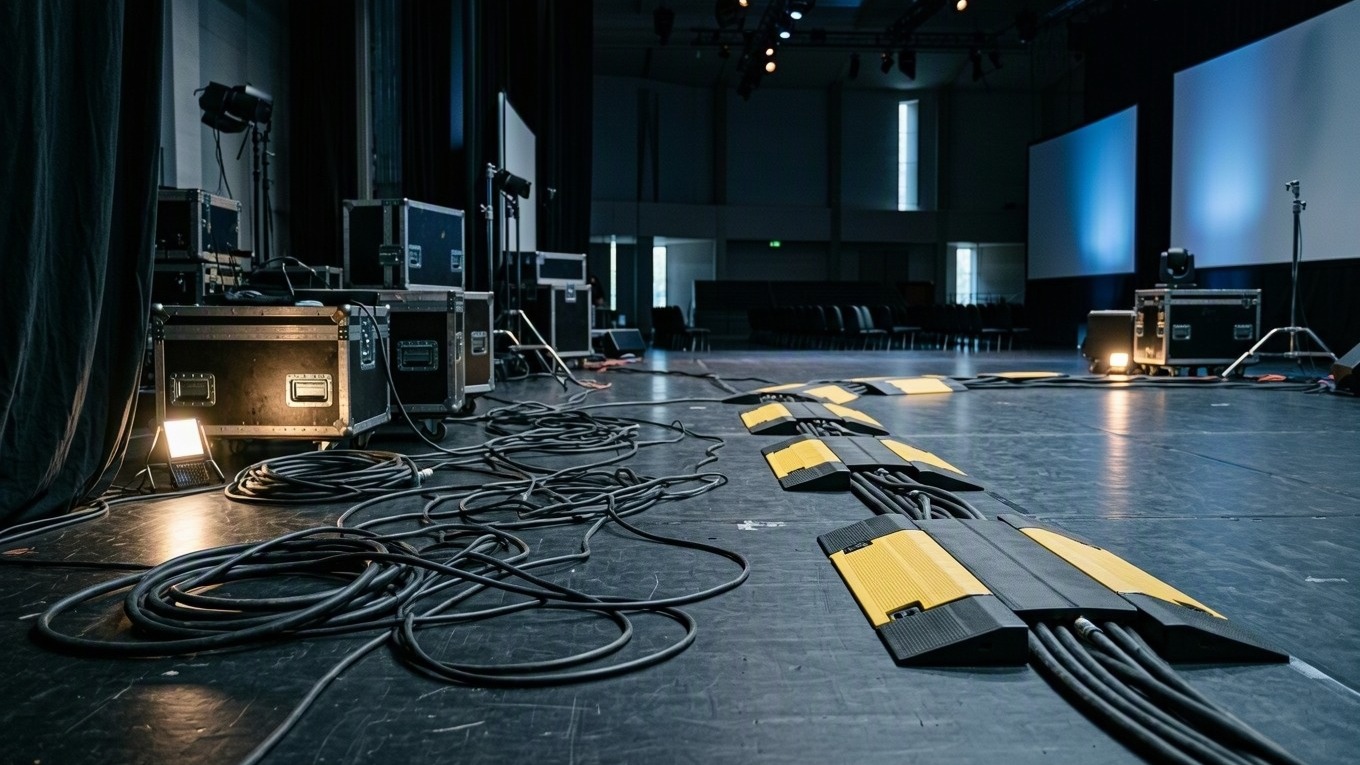
The event team records the same lesson after every client programme: final presentation files arrive too late. The debrief notes describe rushed checks, confused version control and avoidable pressure before guests enter. Everyone agrees that the process should improve. Then the document is filed, the next project starts and the same problem returns.
This is not a failure to learn the lesson. It is a failure to convert learning into practice. A useful debrief does more than preserve collective memory; it creates a change that can be tried, assessed and either adopted or revised.
Capture evidence while it is still specific
Hold the conversation soon enough that participants can recall sequences, decisions and constraints. Ask for concrete evidence: What was expected? What happened? At what point did the work diverge from the plan? Which records, messages, schedules or stakeholder comments help establish that?
The Association for Project Management recommends recording evidence about achieved objectives, unresolved issues and stakeholder feedback during project closure, with later attention to realized benefits. That emphasis keeps a debrief connected to project performance rather than turning it into a general discussion of how people felt.
Timeliness should not mean haste. The aim is to capture details before they blur, while allowing participants to check records and distinguish a single recollection from a repeated pattern.
Separate observation from explanation
“The approved deck reached production at 6 p.m.” is an observation. “The client is always disorganized” is an explanation—and a broad one that the team may not be able to support. Mixing the two encourages vague remedies aimed at personalities rather than work design.
In an illustrative small event-production company, the team might establish that three file versions circulated on event day, the show caller did not know which was final and no deadline in the project schedule triggered an escalation. Those observations do not prove why each person acted as they did. They do, however, reveal a controllable weakness in the handoff.
The United States Army describes after-action reviews as planned, facilitated discussions connected to standards and specific observations, followed by actions such as procedure changes or retraining. Ordinary business projects are not military operations, but the distinction between evidence and interpretation transfers cautiously: teams need a shared account before choosing a response.
Choose one change that matters
A debrief can generate ten reasonable improvements and still change nothing. Prioritize one adjustment material enough to affect the recurring problem and narrow enough to test on the next suitable project.
For the event company, that change could be a formal content lock 24 hours before technical rehearsal. Any later revision would require the project lead to label the new file, record who approved it and notify production through one agreed channel. The example is intentionally limited: it changes the handoff instead of attempting to redesign every part of client communication.
UK Resilience Academy guidance presents learning as a cycle that includes capture, analysis, validation, prioritization, implementation, monitoring, evaluation and embedding. Business teams operate in a different context, yet the cycle highlights a useful discipline: identifying a lesson is not the same as implementing it.
Give the test an owner
Name one person responsible for running the test, not merely “the team.” Define where it will apply, what must happen and what evidence will be collected. The event project lead might own the new content-lock process for the next two comparable client events, recording submission times, post-lock revisions and whether production received one clearly approved file.
Ownership is not blame. It provides a point of coordination and makes the test visible among competing deadlines. The U.S. Army Corps of Engineers calls for reviews at project milestones and for lessons to be captured, validated and shared when they may matter beyond one project. For a small company, validation begins by checking whether its proposed change works in its own workflow.
Return to the decision
Set the review date during the debrief. After the test, ask: Was the change followed? Did the targeted problem recur? Did the process create a different difficulty? Is the evidence strong enough to adopt, adjust or stop the practice?
A debrief closes only when the team revisits the change. Without that return, a lesson remains an observation. With it, leaders create a modest but credible learning loop: evidence becomes a decision, the decision becomes a test and the test informs later practice.
Sources
- United States Army (published 2025-02-20; accessed 2026-10-18)
- UK Resilience Academy (published 2024-09-30; accessed 2026-10-18)
- Association for Project Management (published 2019-10-07; accessed 2026-10-18)
- U.S. Army Corps of Engineers (published 2022-09-30; accessed 2026-10-18)