

Insight
Interview Buyers Before Building the Next Offer
A polished product can hide an untested assumption. Learn how buyer interviews, observation, and rough prototypes can guide a production decision.
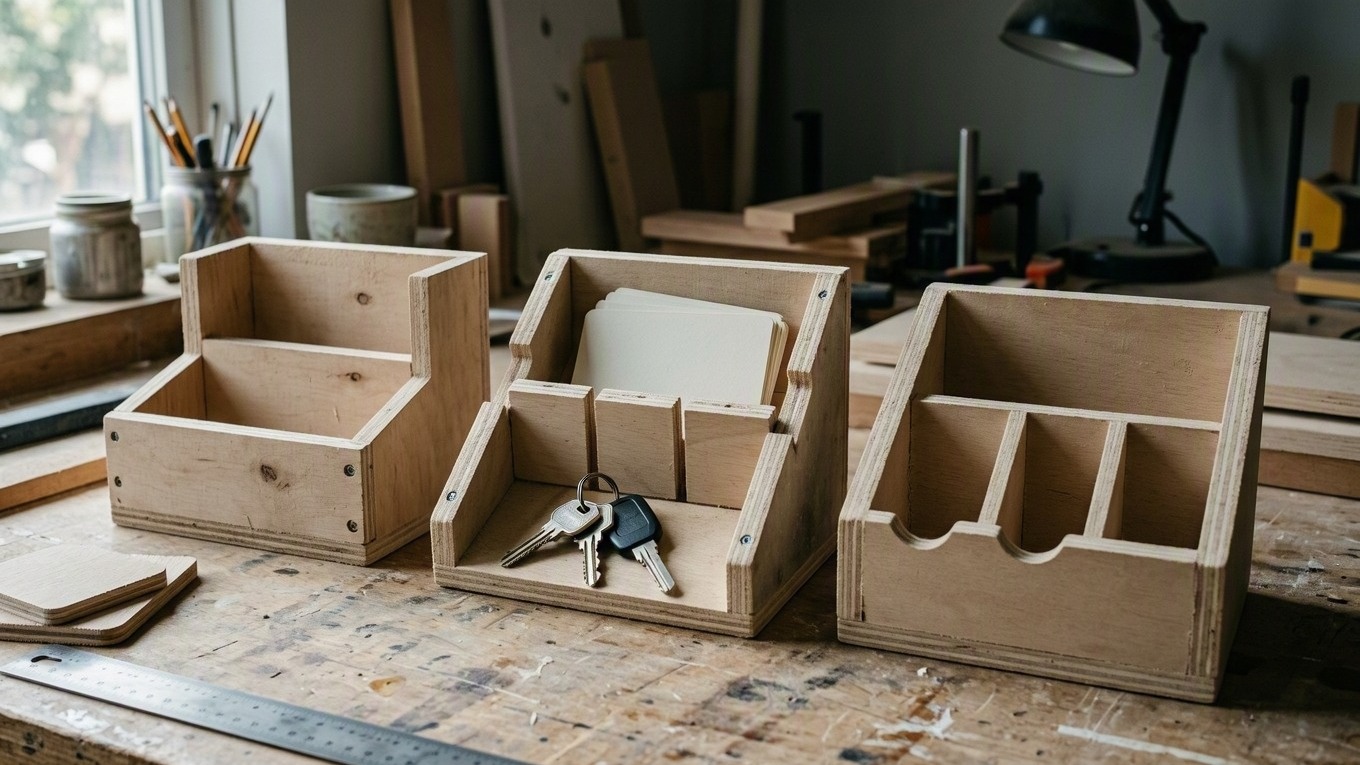
Before an independent maker perfects the finish, packaging, and production plan for a modular countertop organizer, there is a more expensive question to answer: does the organizer solve a problem people actually have in the spaces they use every day?
It is easy to see the product from the workbench. The maker may picture interchangeable trays for coffee supplies, mail, cooking tools, or small electronics. She may be able to explain how the pieces stack, wipe clean, and fit a narrow counter. But a clear product concept is not the same as evidence that a particular buyer will make room for it, understand it, or choose it over the system already in place.
The U.S. Small Business Administration advises entrepreneurs to define a market need and test a smaller version of an idea with actual customers before committing fully. For this organizer, that means starting with the countertop rather than the object. The useful discovery is not that people have clutter in the abstract. It is how clutter accumulates in a specific place, what gets moved repeatedly, what cannot be put away, and what current workaround the person tolerates.
Watch the job before naming the solution
The maker can ask a prospective buyer to walk through a normal morning in her kitchen or home office. Where do keys land? Which items need to remain visible? What happens when a partner, child, or roommate uses the same surface? A person may say she wants an organizer, then reveal that she clears the counter every evening because she dislikes anything left out. Another may need open access to frequently used items, making deep bins less useful than shallow sections.
Those details change the design brief. They may point to a countertop organizer, but they may also point to a wall-mounted option, a tray that travels between rooms, or no organizer at all. Observation keeps the maker from treating her first form factor as the problem itself.
Questions should be neutral and rooted in current behavior. Ask what the person uses now, when that setup becomes frustrating, what she has tried, and how she decides whether something earns counter space. Avoid asking whether she likes the proposed organizer or whether she would buy it. Those questions invite a polite response and center the maker’s idea too early. The National Science Foundation describes customer discovery as asking potential users whether they want an offering and how they would prefer it delivered; the findings can refine a prototype. The point is to learn what an offering must do, not to collect encouragement for a finished concept.
Make the test cheap enough to change
Next, the maker can build a rough version from inexpensive materials. It does not need polished corners, final colors, or retail-ready branding. It needs to make the central use visible: perhaps three removable sections arranged on a standard countertop. She can show it to people whose routines suggest different needs and ask them to place their own everyday items in it. Their choices expose whether the modules are intuitive, too small, too numerous, or simply irrelevant.
A rough prototype also gives the conversation a productive limit. Instead of debating imagined features, the maker can see whether people use a section as intended, move it immediately, or ignore it. A potential buyer who says the coffee station needs one fixed tray rather than separate modules is not rejecting the project; she is challenging its central assumption. That is valuable before materials, inventory, and packaging make change costly.
MIT Sloan describes an action-learning case in which potential-customer interviews were used to assess market segments and revise a company’s messaging. The same discipline applies here. The maker should compare what she hears across distinct use contexts rather than combine every response into one broad audience. A household managing coffee supplies may need a different message and configuration from a remote worker managing devices and papers.
Choose a decision, not a compliment
Production should follow evidence tied to a clear choice. Proceed when repeated conversations and prototype use show a defined group with a consistent countertop problem, a credible place for the organizer, and a configuration that fits its routine. Change course when users identify a real problem but their behavior favors a different format, module count, or use context. Pause when interest remains general and no one can connect the object to a current workaround or a concrete place in the home.
In this illustrative example, the maker does not need unanimous approval. She needs enough direct learning to explain whom the organizer serves, what current behavior it improves, and which version is worth making first. That is a stronger production brief than a beautifully polished assumption.
Sources
- U.S. Small Business Administration (published 2017-04-12; accessed 2026-09-20)
- U.S. National Science Foundation (published 2021-07-28; accessed 2026-09-20)
- MIT Sloan (published 2024-01-10; accessed 2026-09-20)