

Member Feature
Damla Didin on Rebuilding a Career Beyond Her Comfort Zone
After moving from Istanbul to the United States, Damla Didin combined continued education with the work of rebuilding her career and raising a family. Her path from real estate to business operations shows how existing experience can become a foundation for reinvention.
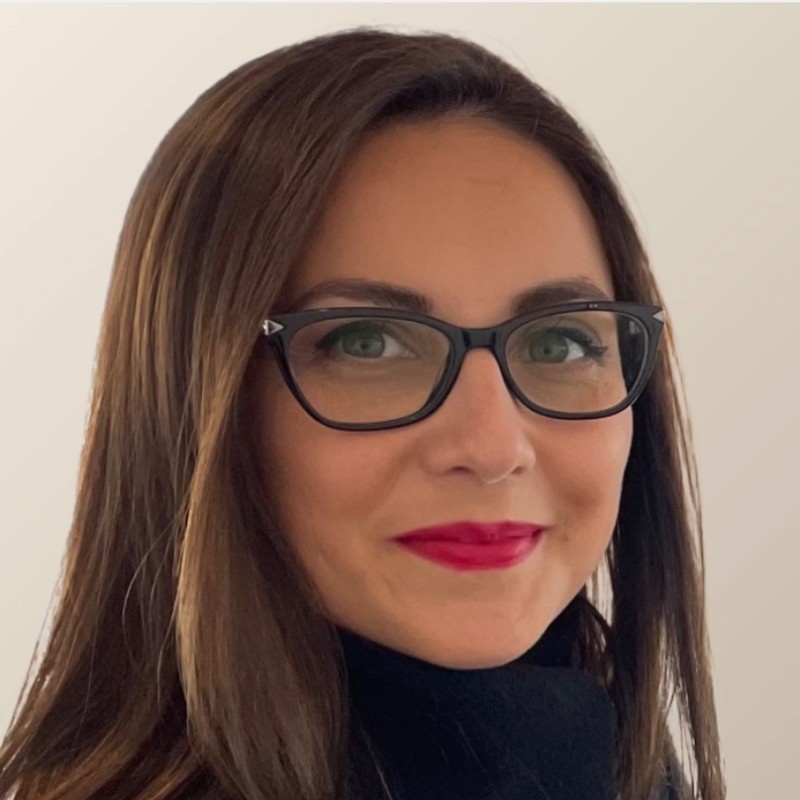
For Damla Didin, stepping outside her comfort zone did not mean leaving her previous experience behind. It meant learning how to carry that experience into an unfamiliar environment—and allowing it to support a different kind of career.
Born and raised in Istanbul, Türkiye, Damla studied Urban and Regional Planning at Yildiz Technical University’s Faculty of Architecture. She then began her career in real estate, working for several years as a licensed real estate appraiser before assuming operations leadership responsibilities. The field helped her develop analytical thinking, project management skills, and the ability to work through complicated business questions.
Those capabilities would remain relevant even as the setting, industry, and direction of her professional life changed.
Beginning again in a new country
In 2018, Damla moved to the United States with her family. The transition required her to leave an established career and professional network in Türkiye. It also prompted her to reconsider what she wanted from the next stage of her working life.
Rebuilding was not a matter of following a predetermined route. As a mother establishing a life in a new country, she continued her education while gradually creating a new professional foundation. The process called for patience, adaptability, and a willingness to enter spaces where familiar credentials and relationships could no longer be taken for granted.
Her experience offers a practical view of reinvention: starting again does not necessarily mean starting without resources. Knowledge developed in one field can inform another. Skills such as analysis, coordination, and structured problem-solving can travel across industries, even when job titles and responsibilities change.
Using education to widen the path
Education became an important part of Damla’s transition. She pursued professional studies in Real Estate Development and Land Use at NYU, connecting her earlier experience with the American professional environment. She later earned an MBA from Longwood University with a 4.0 GPA and was inducted into The Honor Society of Phi Kappa Phi.
As her interests expanded, sustainability and responsible business became increasingly important to her. She completed the Sustainability Strategies program at Stanford Graduate School of Business, adding another perspective to the operational and strategic work she was building toward.
Together, these studies reflect more than the accumulation of qualifications. They show how Damla approached uncertainty: by continuing to learn, examining new possibilities, and developing tools that could help her contribute in a broader business context.
Turning complexity into coordinated action
Today, Damla works in business operations and strategy at a better-for-you snack company. Her cross-functional role touches strategic planning, corporate governance, sustainability, legal and intellectual property coordination, executive operations, and company-wide initiatives.
Her work has included leading the development of the organization’s first three-year strategic plan and authoring its first sustainability report. She has also helped establish a more structured process for Board governance and reporting while managing important intellectual property initiatives.
Although these responsibilities span distinct areas, they share a common requirement: bringing people, information, and priorities together. Damla identifies that connective ability as one of her central strengths. Her work involves finding structure within complexity and helping translate broad goals into coordinated action.
Her earlier background helps explain that approach. Urban planning considers how many interconnected elements shape a larger system. Real estate appraisal demands careful analysis, while operations leadership requires organization and follow-through. In her current work, those habits support responsibilities that cross departmental boundaries.
Growth without a straight line
Damla’s path—from urban planning and real estate to strategy and operations—does not follow a conventional sequence. Rather than viewing that as a disadvantage, she sees value in the adaptability, resourcefulness, and curiosity required to make those transitions.
The significance of her journey lies not only in reaching a new professional chapter, but also in how she built it while raising a family and adapting to another country. Each step required her to engage with unfamiliar systems without discounting what she had already learned.
That perspective now shapes what matters to her: continued growth, meaningful impact, sustainability, community engagement, and support for women navigating professional or personal transitions. Her experience suggests that leaving what is comfortable can create room for a wider understanding of one’s capabilities. Reinvention, in this view, is not a rejection of the past. It is the deliberate work of turning experience into a foundation for what comes next.